
A jug of sliced cucumber, a few coins of fresh ginger, a sprig of mint from the corner shop, and a litre of cold tap water. By lunchtime, the flavours have opened out, the glass is quietly encouraging you to drink another one, and the pattern that usually takes you to a 3 pm diet cola has been interrupted. These detox water recipes UK readers search for are not a cleanse, and they do not remove anything magical from your body. What they do is nudge you towards drinking the 1.5 to 2 litres of fluid a day the NHS suggests most adults need, and they make that water taste like something you actually want.
Updated 2024 NHS Eatwell guidance continues to frame water, lower-fat milks, and unsweetened drinks as the core of daily fluid intake, with fruit juice and smoothies capped at 150 ml a day because of their free-sugar content. Infused water slots into that guidance cleanly. There is no sugar, no blend of concentrated fruit calories, no marketing claim to live up to. It is water with the flavour turned up.
Four recipes below, each built around ingredients that a Tesco, Sainsbury’s, or Aldi shopper can find without a second trip, each designed to sit in the fridge for up to 24 hours, each with prep time, yield, and a nutritional highlight so you can see exactly what you are drinking. None of them will detoxify your liver. Your liver does that already, quietly, through hepatic phase I and phase II pathways the body has been running all morning. What they can do is make a boring hydration habit feel like something closer to a ritual.
What are detox water recipes and what can they actually do
Detox water is fruit, herb, or vegetable-infused cold water, usually made in a jug and left to steep for 30 minutes to a few hours. It does not remove toxins, which is a claim the British Dietetic Association has been clear about for years: the liver, kidneys, lungs, gut, and skin already handle the body’s waste removal without needing a cucumber’s help. What infused water does well is encourage hydration by making water more appealing. Mild flavour enhancement reliably increases fluid intake in adults who find plain water monotonous. That is a small effect, but a useful one.
The name has stuck because it sounds decisive. The reality is gentler. You are not flushing anything. You are giving yourself a reason to refill the glass. If you take prescription medication, are pregnant, or manage a kidney condition, speak to your GP or a registered dietitian before using infused waters that rely on large quantities of grapefruit, lemon, or ginger, all of which can interact with common drug regimens.
The British supermarket ingredients worth keeping in
The beauty of infused water is how forgiving it is about which supermarket you got to on Sunday. A standard cucumber costs around 70p, a bag of lemons under £1.50, a piece of fresh ginger root about 40p, and a bunch of mint between 60p and £1. Frozen berries are the quiet heroes here, because they release colour and flavour faster than fresh, cost less, and live in the freezer until Tuesday. A 500g bag of frozen raspberries or blueberries sits between £2.50 and £3.50 across Tesco, Sainsbury’s, and Aldi.
A quick note on ingredient names, because US recipe sites dominate this category and their ingredient lists do not always translate. Rocket, not arugula. Courgette, not zucchini. Spring onion, not scallion. Coriander leaf, not cilantro. Small things, but the kind of small things that decide whether a recipe feels like yours.
Fun fact: A 2023 study in the European Journal of Nutrition found that adults who drank flavoured or infused water consumed an average of 370 ml more fluid daily than those drinking plain water alone, with no change to calorie intake.
Cucumber mint and lime a clean weekday jug
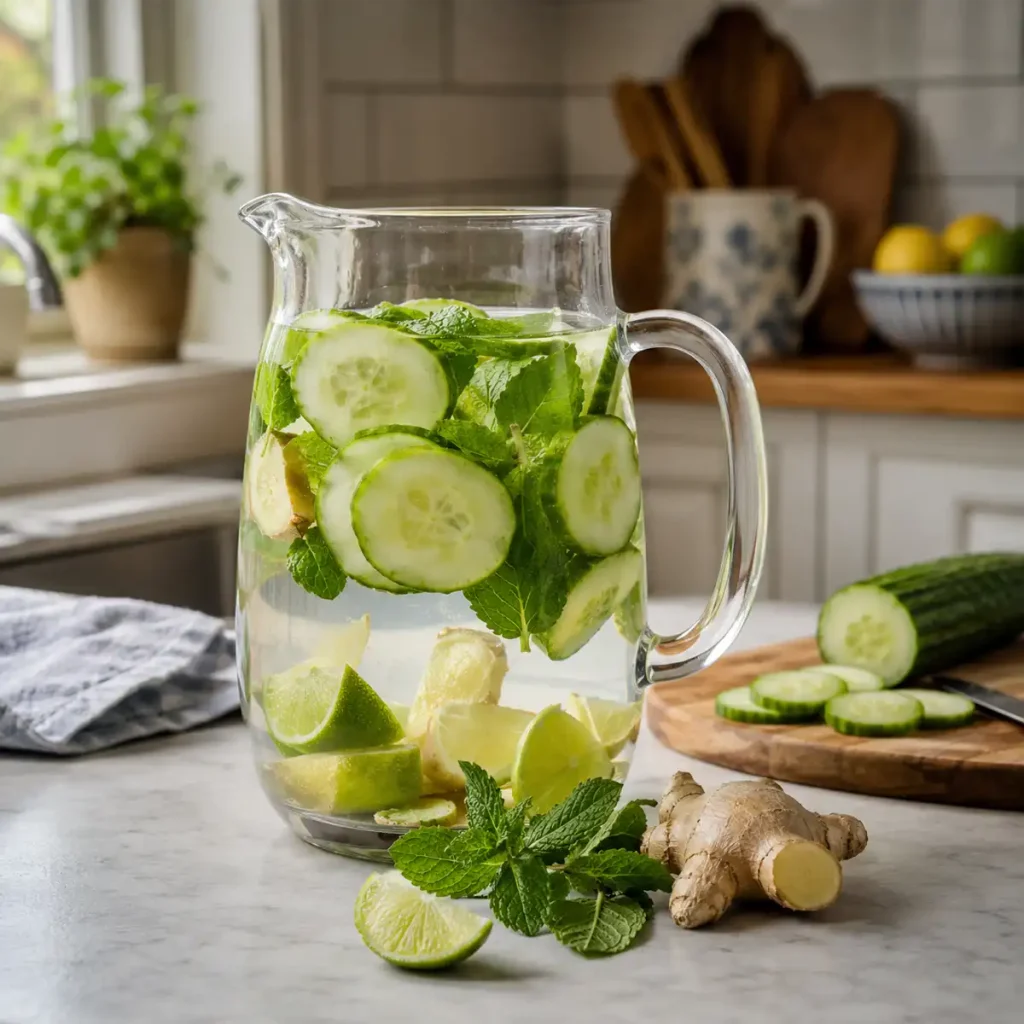
Cucumber mint and lime water is the recipe to start with if infused water has always struck you as fiddly. Preparation time is 5 minutes, total infusion time is 30 minutes in the fridge, and the jug yields 1.5 litres or about 6 glasses. Slice half a cucumber into thin rounds, add the zest and juice of one lime, drop in a generous handful of fresh mint leaves (around 10g), and top up with 1.5 litres of cold filtered or tap water. Give it a gentle stir and leave it on the middle shelf of the fridge for half an hour.
Nutritional highlight: cucumber contributes around 95% water content and a useful dose of silica and vitamin K, while fresh mint delivers rosmarinic acid, a polyphenol linked in preliminary research to modest anti-inflammatory activity. The lime adds vitamin C and the kind of brightness that makes the jug worth refilling. Gluten-free and dairy-free. For a dairy-free, nut-free sparkling variation, swap half the still water for sparkling water just before serving. It keeps for 24 hours; after that the cucumber starts to soften and the flavour turns slightly bitter.
Ginger lemon and turmeric for cold mornings
Ginger lemon and turmeric water is a warming infusion built for the season when a cucumber jug feels too cold to face. Preparation time is 7 minutes, infusion is 1 hour at room temperature, and the jug yields 1 litre or 4 glasses. Thinly slice a 3 cm piece of peeled fresh ginger, halve one unwaxed lemon and slice it thinly (skin included), add half a teaspoon of ground turmeric and a good pinch of black pepper to activate curcumin absorption, and pour over 1 litre of just-warm (not hot) water. Leave covered at room temperature for an hour, then transfer to the fridge.
Nutritional highlight: ginger has been associated with modest improvements in digestive comfort in a 2022 systematic review in the journal Nutrients, and lemon peel adds a small dose of flavonoids that plain lemon juice does not. Turmeric’s curcumin is poorly absorbed on its own, which is why the black pepper matters: piperine can increase curcumin bioavailability by a significant margin. Dairy-free, gluten-free. For a low-FODMAP variation, reduce the lemon to a quarter and skip the slices, using juice only.
Drink warm in the morning if you find plain water hard going before breakfast, or chill fully for a more refreshing afternoon glass. A small word of caution: high doses of ginger can interact with blood-thinning medication, so if you are on warfarin or similar anticoagulants, check with your GP or pharmacist before making this a daily habit.

Raspberry blueberry and basil for bright afternoons
Raspberry blueberry and basil water is the one to make when you are craving something sweet at 3 pm but know the fourth digestive biscuit is not the answer. Preparation time is 3 minutes, infusion is 45 minutes in the fridge, and it yields 1.5 litres or 6 glasses. Tip 150g of frozen raspberries and 100g of frozen blueberries straight from the freezer into a large jug, add 6 to 8 fresh basil leaves (torn gently, not chopped, to release the oils without bruising), and top up with 1.5 litres of cold water. The frozen fruit chills the water as it thaws, so there is no need to add ice.
Nutritional highlight: berries deliver anthocyanins, which are pigment polyphenols associated in observational research with vascular and cognitive health benefits. A 2024 review in the American Journal of Clinical Nutrition concluded that regular anthocyanin intake was associated with modest improvements in blood pressure and endothelial function, though the strongest evidence came from whole berry consumption rather than infused water. The infusion is not a replacement for eating the fruit. It is a companion to it. Gluten-free, dairy-free, nut-free.
Apple cinnamon and star anise for the evening
Apple cinnamon and star anise water is the evening jug, the one that replaces a glass of wine at 8 pm without asking you to feel virtuous about it. Preparation time is 6 minutes, infusion is 2 hours at room temperature then chill, and it yields 1.5 litres or 6 glasses. Core and thinly slice one unwaxed English eating apple (Cox or Braeburn both work well), drop in one cinnamon stick snapped in half, add 2 whole star anise, and pour over 1.5 litres of cold water. Leave on the worktop for 2 hours to let the spices open out, then move to the fridge.
Nutritional highlight: cinnamon has been studied for effects on post-meal blood glucose, with a 2023 meta-analysis in the journal Critical Reviews in Food Science and Nutrition finding small but statistically significant reductions in fasting blood glucose in people with type 2 diabetes. The doses in these trials were considerably higher than an infused water can deliver, so think of this as a flavour that pairs well with mindful evening eating rather than a glucose intervention. Gluten-free, dairy-free, and naturally sweet enough that you stop reaching for the biscuit tin by 9 pm.
How infused water fits into a sensible daily routine
The NHS suggests most adults aim for 6 to 8 cups of fluid a day, around 1.5 to 2 litres. Water, lower-fat milks, tea, coffee, and unsweetened drinks all count. Fruit juice and smoothies are capped at 150 ml a day because of their free-sugar content. Infused water sits alongside plain water, not against it. You are not replacing water with a cleanse. You are making one jug of water more enjoyable so you drink another two.
A reasonable weekly pattern: one jug on the go in the morning, one in the afternoon at your desk, and a fresh one in the evening if the wine habit is something you are quietly trying to loosen. Speak to your GP or a registered dietitian before making significant changes to your fluid intake if you manage a condition affecting kidney function, heart failure, or fluid balance.
What infused water will not do for you
It will not remove toxins from your body. The liver and kidneys handle that already. It will not cause meaningful weight loss unless it replaces higher-calorie drinks in your day, in which case the benefit comes from the calorie reduction, not the cucumber. It will not balance your pH, flush your lymph, or reset your digestive system. Commercial detox products making those claims continue to lack robust clinical evidence, as summarised in a 2017 review in the Journal of Human Nutrition and Dietetics and restated in recent BDA detox guidance.
What it will do is make drinking water feel like something you chose rather than something you were told to do. For most people, that is the quiet difference between a resolution that lasts a week and a habit that lasts a year.
A hydration habit that outlasts the jug
Start with cucumber mint lime tomorrow morning. Make it in a 1.5-litre jug before you leave the house, keep it on your desk, and finish it by 2 pm. On Wednesday, swap to ginger lemon turmeric if the weather is grim. By the weekend, the berry basil jug becomes your afternoon alternative to a third cup of coffee. Keep one cinnamon stick, a bag of frozen berries, and a lemon in rotation, and the whole detox water recipes UK rhythm sits on standby. None of this is a cleanse. All of it is steadier hydration and one less reason to reach for a sugary drink at 3 pm.