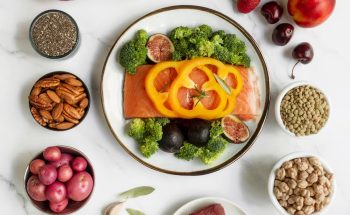
Ultra-processed food (UPF) has had an unusually good few years for a concept that began life in a Brazilian nutritional epidemiology paper in 2010. Chris van Tulleken’s Ultra-Processed People reached the Sunday Times bestseller list in 2023. The UK parliament held evidence sessions on UPF and public health. And now the term has reached the self-checkout queue, where it can mean everything from a specific concern about emulsifiers and artificial flavouring to a vague sense that your lunch is somehow wrong. Understanding ultra-processed food UK reduction is not complicated, but it does require knowing what the term actually means, what the evidence says, and what the practical swap looks like at Tesco on a Wednesday evening. This article covers all three.
What NOVA Classification Actually Is
The NOVA classification divides food into 4 groups by degree of industrial processing. Group 1 is unprocessed or minimally processed food (fruit, vegetables, eggs, plain meat). Group 2 is processed culinary ingredients (oils, flours, salt). Group 3 is processed food (tinned tomatoes, cheese, cured meat). Group 4 is ultra-processed food: industrial formulations containing ingredients not found in domestic kitchens, designed for palatability, convenience, and shelf life.
Group 4 is where the evidence concerns sit. NOVA Group 4 products typically contain emulsifiers (polysorbate 80, carboxymethylcellulose), modified starches, artificial sweeteners, flavour enhancers, colourings, and humectants. The key indicator is not individual ingredients but the industrial combination of them. A plain tinned tomato is Group 3. A pasta sauce with modified maize starch, flavour enhancer E635, and caramelised sugar is Group 4. The difference is not whether the tomatoes are healthy. It is whether the product has been engineered to override satiety signals and encourage overconsumption.
What the Evidence Says in 2026
The van Tulleken BMJ paper (2023) synthesised evidence from 45 pooled analyses of prospective cohort data covering 9.9 million people and found consistent associations between high UPF intake and increased risk of cardiovascular disease, type 2 diabetes, and all-cause mortality. These are observational associations, not causal proof. The honest framing is that high UPF intake is associated with negative health outcomes at a population level, and preliminary mechanistic research suggests the emulsifiers and sweeteners in Group 4 foods may disrupt gut barrier function and alter the microbiome. A 2024 SACN working paper noted these findings as a priority for future UK dietary guidance review.
What this means practically is not that eating a KitKat will harm you or that all processed food is equivalent. It means that a dietary pattern in which 50 to 60% of energy comes from Group 4 products, which is currently average for UK adults according to the National Diet and Nutrition Survey 2023, is associated with the health outcomes described above.
Fun fact: The food industry spent approximately £143 million on lobbying and public affairs in the UK in 2022, a figure that gives context to why nutrition policy discussions about ultra-processed food have proceeded considerably more slowly than the evidence base would otherwise suggest.
How to Identify UPF at UK Supermarkets
The ingredient list is the most reliable tool. If it contains any of the following, the product is almost certainly Group 4: emulsifiers (E numbers in the 400 to 495 range), modified starch (modified maize starch, modified potato starch), maltodextrin, high-fructose corn syrup or glucose-fructose syrup, flavour enhancers (E621 to E635), hydrolysed protein, and polydextrose. An ingredient list of more than 5 items that includes any of these almost always signals Group 4.
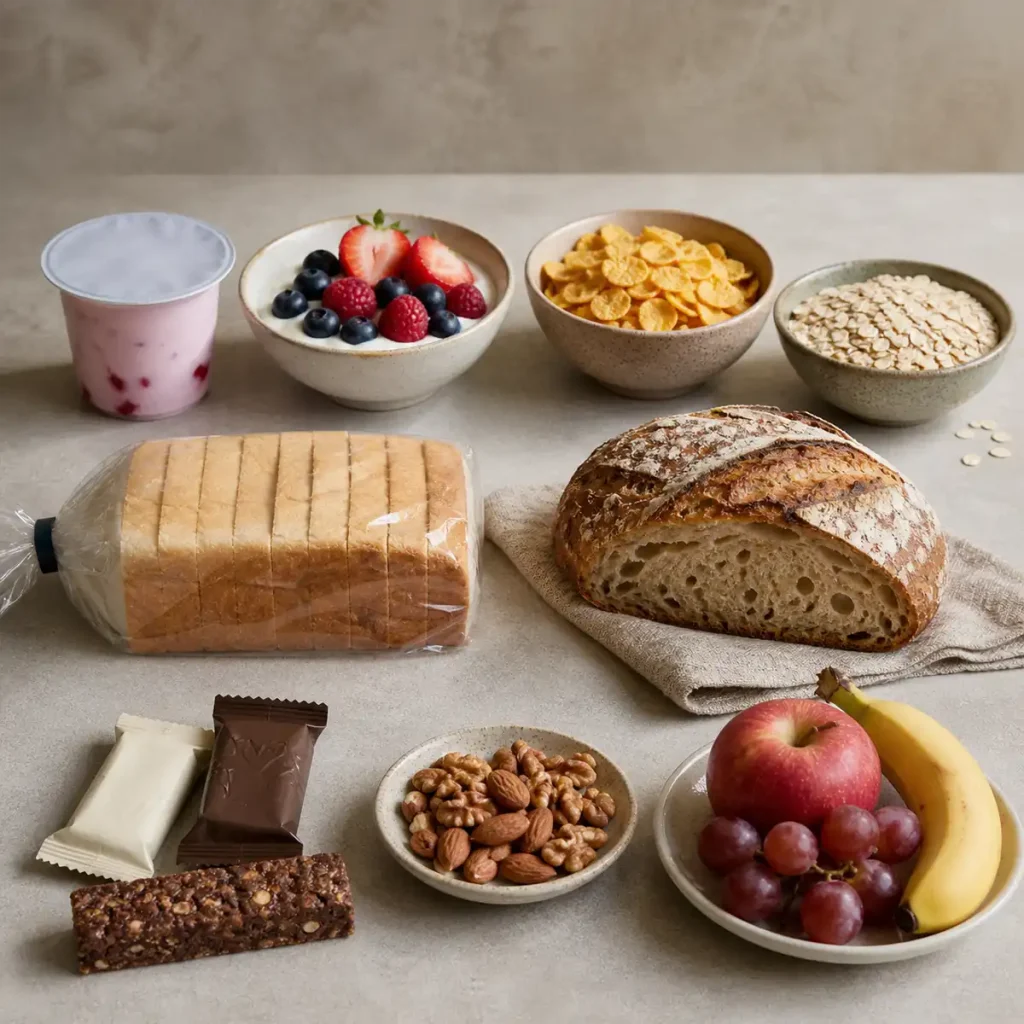
Specific UK examples: most supermarket sliced bread (except sourdough and plain bloomer loaves), most flavoured yoghurts (compare Activia with Onken plain), most breakfast cereals (compare Weetabix with own-brand wheat biscuits, which differ significantly in additives), most meat-substitute products (check Beyond Meat vs a plain chicken breast), and virtually all flavoured crisps, dips, and snack bars.

Practical Swaps at UK Supermarkets
Swap 1: Flavoured yoghurt (Group 4) → Onken natural set yoghurt or Yeo Valley plain (Group 1 to 2). Add your own honey and fruit. The flavoured versions typically contain modified starch, stabilisers, and 15 to 20g of added sugar per 120g pot.
Swap 2: Sliced white or brown sandwich bread → Sainsbury’s sourdough bloomer, Lidl’s Bakery sourdough, or Hovis seed sensations (check ingredients: some are still Group 4). True sourdough has 4 to 5 ingredients maximum.
Swap 3: Sweetened breakfast cereal → plain porridge oats, shredded wheat, or Weetabix (original, not flavoured variants). Weetabix contains 3 ingredients; most flavoured cereals contain 15 to 25.
Swap 4: Flavoured crisps and snack bars → plain nuts, rice cakes with hummus, or fresh fruit. Nakd bars and similar ‘natural’ snack bars vary: check for maltodextrin and modified starch.
The goal is not elimination. The evidence does not support a zero-UPF target. It supports reducing the proportion of total energy from Group 4 foods. The NHS recommends a diet based predominantly on Groups 1 and 2, with Group 3 used normally and Group 4 consumed occasionally. [INTERNAL LINK: the 7-day detox meal plan as the positive eating model | 7-day detox meal plan UK] uses Group 1 to 3 foods throughout and provides a practical weekly structure. [INTERNAL LINK: perimenopause diet UK and UPF risk | perimenopause diet UK] addresses the specific hormonal implications of high UPF intake during hormonal transition.
A Realistic Expectation
Reducing **ultra-processed food UK** intake does not require a complete overhaul of how you shop or cook. It requires two or three specific swaps made consistently. The most impactful targets in the UK dietary pattern are breakfast cereals, sliced bread, flavoured yoghurts, and ready meals. Start with one swap per week. After four weeks, you will have moved the needle meaningfully without the kind of rigid elimination approach that typically fails by week two. Speak to a registered dietitian if you want personalised guidance on how to adapt a high-UPF dietary pattern, particularly if you are managing a condition such as type 2 diabetes, IBS, or elevated cardiovascular risk.
Conclusion: Ultra-processed food is a meaningful dietary concern supported by substantial observational evidence and growing mechanistic research. The NOVA classification is a practical tool, not a perfect science, and the evidence does not support treating all processed food as equivalent to Group 4 formulations. The practical task is straightforward: identify where Group 4 foods make up the largest share of your daily eating, and make one or two targeted swaps towards Group 1 to 3 alternatives available in your usual supermarket. The evidence will not support panic. It will support steady, informed **ultra-processed food** reduction as part of a broadly whole-food dietary pattern.