You know the sleep is different now. Not the new-baby kind of disrupted, but the 3 am kind, where you are completely awake and your mind has decided to perform a detailed audit of everything you have ever said at a work meeting. You know the weight around your middle appeared without any particular change in what you eat. And you have probably read enough to know that oestrogen is involved, that inflammation matters, and that something called a perimenopause diet UK approach is theoretically available to you. The gap between knowing that and actually knowing what to put on your plate on a Tuesday is where most nutrition writing falls short. This is the practical version. It is grounded in NHS and NICE guidance, uses British food, and does not require a nutritionist’s grocery budget.
Why Perimenopause Changes What Your Body Needs from Food
During perimenopause, declining oestrogen levels reduce the body’s natural anti-inflammatory protection. This increases circulating inflammatory cytokines, alters lipid metabolism, accelerates bone density loss, and changes how fat is distributed. Dietary changes that support calcium uptake, anti-inflammatory pathways, and gut microbiome diversity can meaningfully address several of these mechanisms.
Oestrogen has anti-inflammatory properties throughout the body and also plays a role in gut microbiome diversity. As levels decline, the microbiome can shift in ways that affect mood, digestion, and immune function. The British Menopause Society’s 2023 dietary guidance notes that nutrition during the perimenopause transition is underrepresented in clinical settings and that food-based interventions have a stronger evidence base than many women are told.
NICE Guideline NG23, updated in 2023, covers menopause management and explicitly identifies dietary support as a first-line recommendation alongside HRT for managing bone health and cardiovascular risk. It is the most current UK clinical framework for this conversation, and it supports a food-based approach as genuinely useful rather than a soft alternative.
The 5 Key Nutrients and Where to Find Them in British Food
Calcium and vitamin D: Bone density loss accelerates after the final menstrual period, but the process begins in perimenopause. The NHS recommends 700mg of calcium daily for adults, and most UK women in their 40s fall short. UK sources include natural yoghurt (200mg per 150g), tinned sardines with bones (350mg per 100g), semi-skimmed milk (250mg per 200ml), kale and spring greens (approximately 150mg per 80g cooked portion), and fortified oat or soy milk (typically 240mg per 200ml). Vitamin D is required for calcium absorption; the NHS recommends a 10-microgram supplement for all UK adults from October to March.
Omega-3 fatty acids: These support the anti-inflammatory response and appear to reduce hot flush frequency in some trials. A 2023 RCT in Menopause found that omega-3 supplementation reduced hot flush severity scores in perimenopausal women over 12 weeks. UK oily fish (mackerel, sardines, herring, salmon) eaten twice weekly is the most effective dietary route. Walnuts and ground linseeds provide plant-based ALA, though conversion to the active EPA and DHA is limited.
Phytoestrogens: Soy isoflavones and lignans have structural similarities to oestrogen and may modestly reduce vasomotor symptoms in some women. The evidence is mixed, but a 2022 Cochrane review found that soy isoflavones reduced hot flush frequency by approximately 21% compared to placebo. UK-accessible sources include edamame (available frozen in Waitrose and Tesco), soy milk (Alpro unsweetened), tofu, tempeh, and ground linseeds. Effects are more consistent in women who are equol producers, a trait influenced by gut microbiome composition.
Magnesium: Magnesium supports sleep quality, muscle function, and bone density, and UK dietary surveys consistently show intake below the reference nutrient intake of 270mg for women. Pumpkin seeds (150mg per 30g), dark chocolate (64mg per 30g), almonds (75mg per 30g), and leafy greens contribute meaningfully. A 2023 review in Nutrients found magnesium supplementation improved sleep quality scores in peri- and post-menopausal women.
Fibre and fermented foods: Gut microbiome diversity declines with oestrogen loss. A diet delivering 30g fibre daily from whole grains, beans, vegetables, and fruit, alongside regular fermented foods (kefir, natural yoghurt, kimchi, miso), supports microbiome diversity and the estrobolome, the community of gut bacteria that metabolise and recirculate oestrogen metabolites.
Fun fact: The estrobolome is the name for the collection of gut bacteria that produce the enzyme beta-glucuronidase, which deconjugates and reactivates oestrogen metabolites in the gut. A less diverse microbiome produces less active oestrogen recirculation, which may amplify some perimenopausal symptoms.

What to Reduce as Much as What to Add
Ultra-processed foods are worth reducing specifically during perimenopause because many contain emulsifiers that have been shown in 2024 research to disrupt gut barrier integrity, affecting the estrobolome and inflammatory load. Alcohol, even at moderate UK recommended limits, amplifies hot flushes and disrupts sleep architecture in the luteal phase. Refined sugar intake correlates with visceral fat accumulation around the abdomen, which is already a tendency of the hormonal shift. None of this requires elimination. It requires awareness and gradual reduction.
Caffeine sensitivity often increases during perimenopause; if sleep quality is a primary concern, moving to a single morning coffee and avoiding caffeine after 1 pm is worth trialling for 2 weeks before drawing conclusions.
When to Speak to Your GP
Dietary changes support the perimenopause transition. They do not treat it, and they are not a substitute for clinical assessment. If your symptoms are significantly affecting your quality of life, sleep, mental health, or ability to work, speak to your GP about NICE NG23 and the full range of management options, including HRT. Your GP can also request bone density screening if you have risk factors for osteoporosis. A registered dietitian can provide a tailored perimenopause diet plan if you have specific nutrient concerns or existing health conditions.
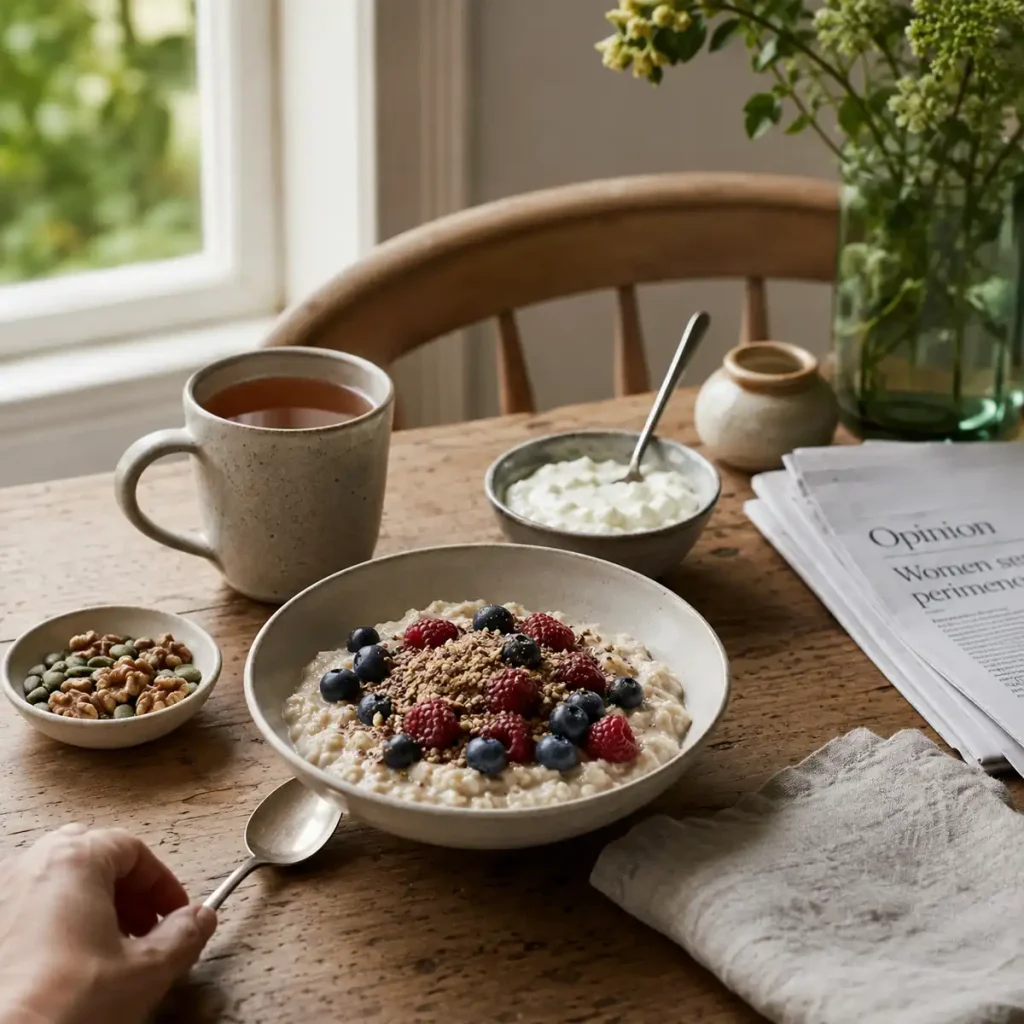
Conclusion: The **perimenopause diet UK** conversation has been too clinical for too long. The practical answer is calcium, omega-3s, phytoestrogens, magnesium, and fibre delivered through British food that you would eat anyway. Sardines on rye bread. Edamame in a stir-fry. Kefir instead of a flavoured yoghurt. Overnight oats with ground linseeds. These are not medical interventions. They are consistent, daily nutritional habits that address the specific mechanisms that perimenopause puts under pressure. Start with one change this week. Add a tablespoon of ground linseeds to your morning porridge or swap a flavoured yoghurt for Onken plain with a handful of berries. The cumulative effect of small, repeated choices is what the evidence supports. And if your symptoms are significant, your **perimenopause diet** is one part of a conversation your GP should be having with you.