The phrase liver detox foods is everywhere in UK wellness content, yet most articles using it skip the most important question. What is the liver actually doing, and how do specific foods interact with that process? The answer is grounded in biochemistry, not marketing. Your liver performs detoxification continuously through two distinct phases of enzymatic activity, and understanding these phases clarifies why certain foods genuinely support liver function and why most commercial detox products do not. Evidence from hepatology research and NHS nutritional guidance consistently points to food-first strategies as the most effective and safest approach. This article explains the science, identifies the specific liver detox foods with the strongest evidence base, and sets a realistic standard for what these foods can and cannot do.
What the Liver Actually Does Each Day
The liver performs detoxification through two sequential phases. Phase I uses a family of enzymes called cytochrome P450s to chemically modify incoming compounds. Phase II attaches water-soluble molecules to these modified compounds so they can be safely excreted via the kidneys or bile. Both phases depend on specific nutrients from food to function at full capacity.
The liver carries out over 500 essential tasks, but its role in processing potentially harmful compounds centres on these two systems. Phase I involves cytochrome P450 enzymes oxidising, reducing, or hydrolysing fat-soluble substances absorbed from the gut. The NHS notes that the liver acts as a filter for everything absorbed from the digestive system before it enters general circulation. Phase II then conjugates the resulting intermediate metabolites, attaching molecules such as glucuronic acid, glutathione, or sulphate to make them water-soluble and excretable.
Both phases are nutrient-dependent. Phase I requires adequate B vitamins, iron, and antioxidants to prevent intermediate metabolites from accumulating. Phase II depends on amino acids (particularly glycine and glutamine), sulphur compounds, and several minerals. This is where diet has its most direct and evidence-supported role.
Which Foods Support Liver Enzyme Activity
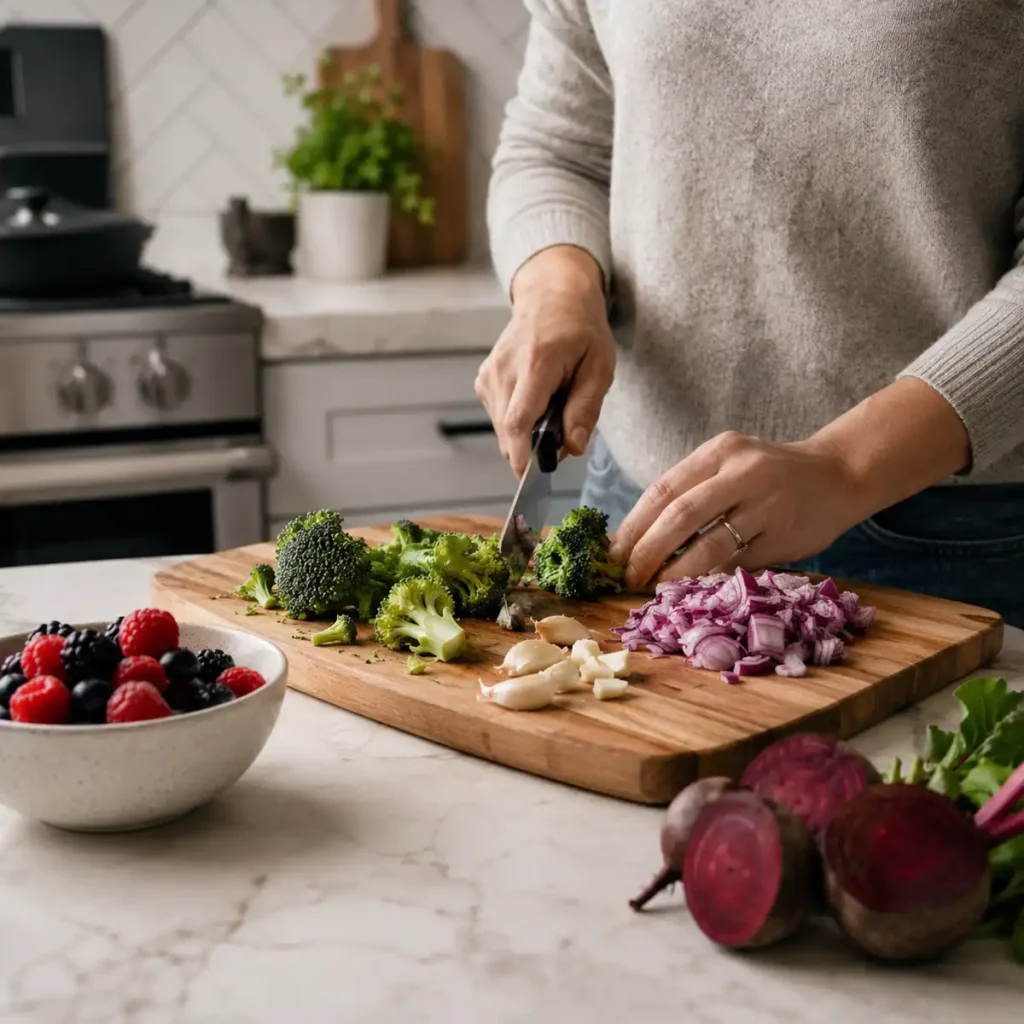
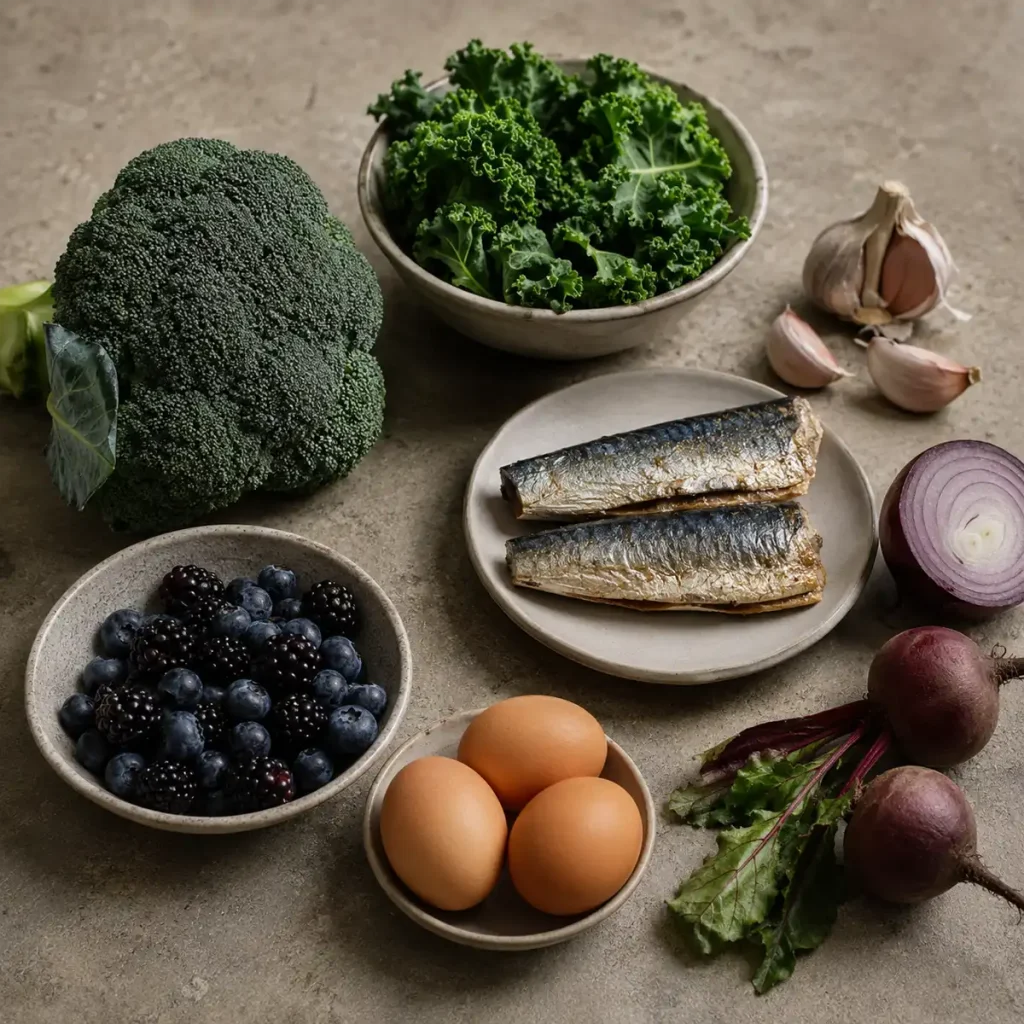
Cruciferous vegetables are the most consistently supported category in the evidence. Broccoli, kale, cabbage, cauliflower, rocket, watercress, and Brussels sprouts contain glucosinolates that are converted in the gut to isothiocyanates, including sulforaphane. A 2022 review in the journal Nutrients found that sulforaphane upregulates both phase I and phase II hepatic enzymes, with the strongest effects observed in regular dietary consumption rather than supplemental forms.
Garlic and onions provide organosulphur compounds, including allicin and diallyl sulphide, that support phase II conjugation pathways. A 2023 systematic review in Frontiers in Nutrition identified organosulfur compounds as consistent inducers of glutathione-S-transferase, a key phase II enzyme. Fresh garlic retains more active allicin than cooked, though cooking preserves the structural organosulphur compounds associated with phase II effects.
Berries — blueberries, blackberries, raspberries, and tart cherries — are rich in polyphenols, including anthocyanins. A 2023 Cochrane-adjacent review in Free Radical Biology and Medicine found that polyphenol-rich dietary patterns were associated with reduced oxidative stress markers in liver tissue, supporting the antioxidant protection that phase I requires to operate safely.
Beetroot contains betalains and dietary nitrates. A 2024 study in Food and Chemical Toxicology reported that betalain-rich extracts supported antioxidant capacity in liver cell models, though robust human RCT evidence remains limited. Beetroot is a useful and nutritionally dense addition to a liver-support diet, but the specific mechanisms observed in cell models have not yet been fully replicated in clinical trials.
Milk thistle (Silybum marianum), taken as a supplement, provides silymarin. A 2023 systematic review in Phytomedicine found silymarin had hepatoprotective effects in patients with existing liver conditions, with more modest evidence for benefit in otherwise healthy adults. If you are considering milk thistle supplementation, speak to a registered dietitian or GP before starting, particularly if you take prescription medication.
Fun fact: The liver can regenerate up to 70% of its mass after partial removal in healthy adults, a property that makes living-donor liver transplantation possible and that reflects just how extraordinary this organ’s repair capacity is.
What Liver Detox Foods Cannot Do
It is important to be direct about this. The liver and kidneys perform the body’s detoxification functions. They do not require external assistance from commercial products. Juice cleanses, detox teas, and activated charcoal supplements lack robust clinical evidence for enhancing liver detoxification in healthy adults. A 2024 review in BMJ Nutrition, Prevention and Health concluded there is currently no reliable clinical evidence that commercial detox protocols improve measurable liver function markers. The British Dietetic Association and the NHS both state that the body does not accumulate toxins that require dietary removal.
What a food-based approach does offer is sustained nutritional support for the enzymatic systems that are already functioning. That is a meaningful, evidence-graded benefit. Supporting phase I and II enzyme activity through regular consumption of cruciferous vegetables, garlic, berries, and adequate protein is not a dramatic claim, but it is a consistently supported one.
Practical Steps for Liver Support in a UK Diet
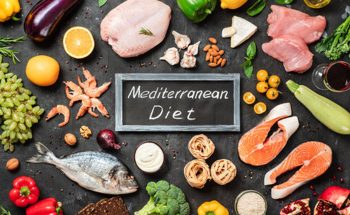
The most practical daily liver-support eating pattern is one that delivers cruciferous vegetables at least 3 to 4 times per week, adequate protein from eggs, fish, legumes, or lean meat to support phase II amino acid requirements, and polyphenol-rich fruits daily. A Mediterranean-style dietary pattern, which the NHS and British Heart Foundation both support for long-term health, provides most of these elements without requiring a dedicated protocol.
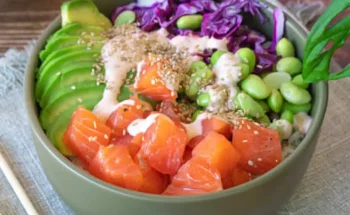
Specific UK staples worth prioritising: a portion of broccoli or kale several times weekly, a small handful of mixed berries daily (fresh or frozen), a clove of garlic or half an onion in regular cooking, and oily fish twice weekly for omega-3s that support liver lipid management.
When to Speak to a GP About Your Liver Health
Dietary changes support a well-functioning liver. They do not treat liver disease. If you are experiencing persistent fatigue, abdominal discomfort in the upper right quadrant, unexplained weight changes, or any yellowing of the skin or whites of the eyes, these are symptoms requiring clinical assessment rather than dietary modification. A GP can assess liver function through a standard blood test panel including ALT, AST, and bilirubin levels. A registered dietitian or hepatologist can then advise on specific dietary adjustments appropriate to your clinical picture.
If you are on prescription medication, including statins or metformin, note that some supplements promoted for liver health can interact with these drugs. Speak to your GP or pharmacist before adding any supplement to your routine.
The Evidence Standard for Liver Detox Claims
When evaluating any product or article claiming to detox the liver, the reliable question to ask is: What is the study design and who funded it? A systematic review or meta-analysis carries more weight than a single observational study, which carries more weight than an anecdote. Strong evidence suggests that cruciferous vegetables and polyphenol-rich fruits support hepatic enzyme activity. Preliminary research indicates that milk thistle silymarin may have hepatoprotective effects in disease states. Some people report benefits from detox protocols, though these reports are not clinical evidence.
The honest conclusion is that the most effective liver support available to healthy adults is a consistent whole-food dietary pattern, adequate hydration, limited alcohol, and avoidance of excess added sugar and ultra-processed foods.
Conclusion: The liver does not need flushing, purging, or commercial cleansing products. What it needs is a sustained supply of glucosinolates, organosulphur compounds, polyphenols, and amino acids from food. The evidence for cruciferous vegetables, garlic, berries, and adequate dietary protein is consistent and grounded in well-understood enzyme mechanisms. Start with one daily addition this week, whether a portion of broccoli with dinner, a handful of blueberries at breakfast, or a garlic clove in your cooking. These are not dramatic interventions. They are exactly the kind of evidence-graded, repeatable choices that support the liver’s existing capacity rather than claiming to do its job for it. If you have any concerns about liver health, your GP is the right first point of contact. **Liver detox foods** work by supporting what the liver already does, and understanding that distinction is what separates evidence-based eating from wellness marketing.