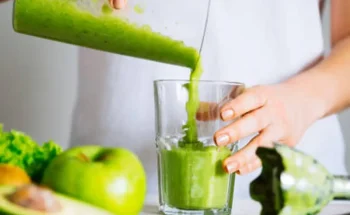
A blender, four ingredients, and about eight minutes. That is genuinely all that stands between you and three of the most liver-supportive breakfasts available in a UK kitchen. These detox smoothie recipes are not built on wellness claims. Each one is built around a specific ingredient with a specific evidence-graded reason to be there, and the role of that ingredient in supporting the liver’s own detoxification pathways is explained clearly. The liver and kidneys perform the body’s detoxification functions. Commercial detox products lack robust clinical evidence for enhancing that process. What these smoothies offer is a genuinely practical way to deliver glucosinolates, betalains, and silymarin through breakfast, in forms that taste considerably better than that sentence suggests. A 2024 systematic review in Nutrients confirmed that whole-food dietary patterns rich in these phytonutrients were associated with improved hepatic antioxidant enzyme activity in clinical trials.
Smoothie 1: Beetroot, Carrot and Ginger Liver Boost
Preparation time: 8 minutes. Cooking time: None. Total time: 8 minutes. Yield: 1 large glass (approximately 350ml).
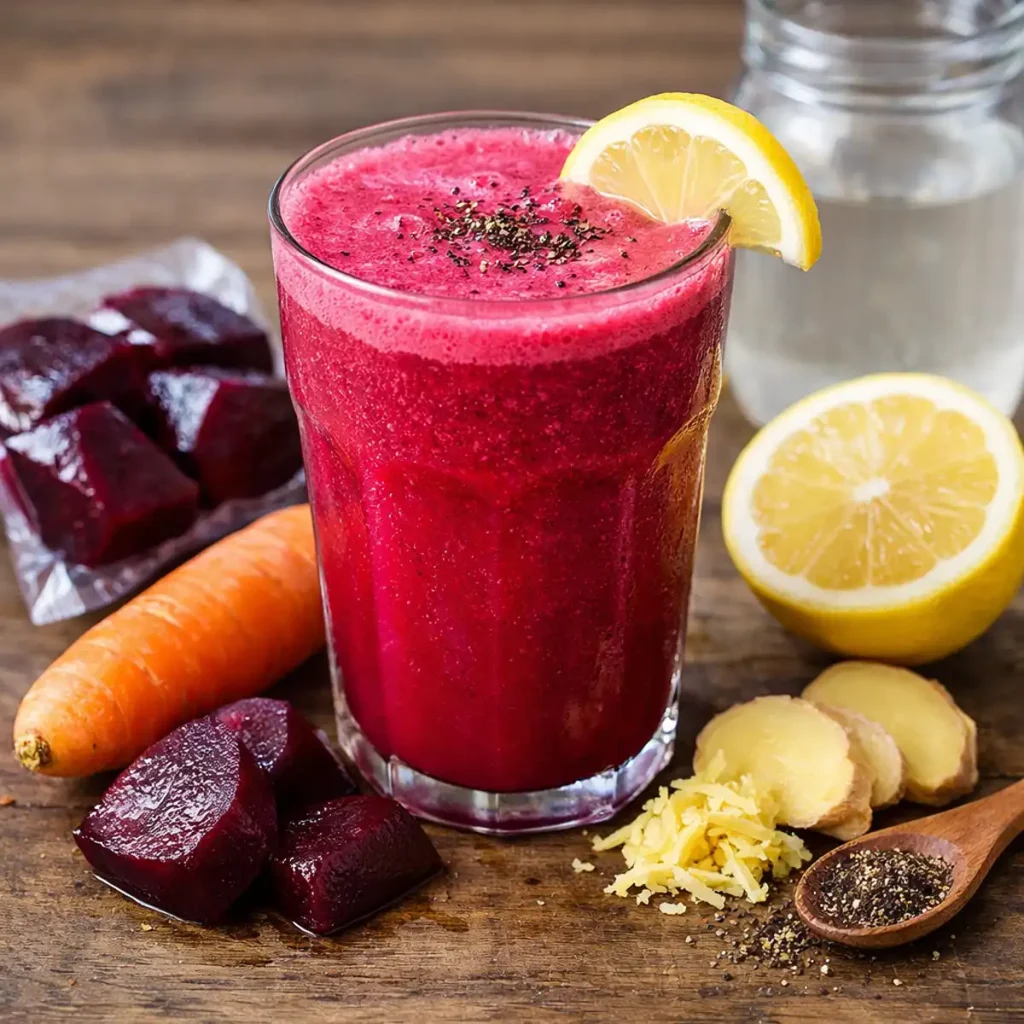
Key ingredients: 100g cooked beetroot (vacuum-packed, not pickled), 1 medium carrot (approximately 80g), 1cm fresh ginger (grated or sliced), juice of half a lemon, 200ml cold water or coconut water, a pinch of black pepper.
Blend everything together until completely smooth. Pour over ice if preferred. The colour is extraordinary, by the way. Deep, copper-edged red. It looks like it is working.
What it does: Beetroot’s betalains and dietary nitrates support vascular function and antioxidant capacity in liver tissue. A 2024 study in Food and Chemical Toxicology found betalain-rich extracts increased hepatic antioxidant enzyme activity in cell models. Carrots provide beta-carotene, which the liver converts to vitamin A; adequate vitamin A is essential for phase I enzyme function. Ginger’s gingerols have demonstrated anti-inflammatory effects in a 2023 Cochrane review at culinary doses.
Nutritional highlight: Approximately 4g fibre, 3g protein, 140 calories per serving. High in folate from beetroot, which supports methylation pathways in phase II liver detoxification.
Substitution: Replace fresh ginger with half a teaspoon of ground ginger for a milder flavour. Use apple juice instead of water for a sweeter version, though this adds approximately 12g of sugar.
Fun fact: Betalains, the pigments that give beetroot its remarkable colour, are water-soluble and pass through the body rapidly. If you notice pink or red urine after eating beetroot, this is called beeturia and is harmless. It is more common in people with iron deficiency or low stomach acid.
Smoothie 2: Broccoli Sprout and Banana Green Smoothie
Preparation time: 7 minutes. Cooking time: None. Total time: 7 minutes. Yield: 1 serving (approximately 300ml).
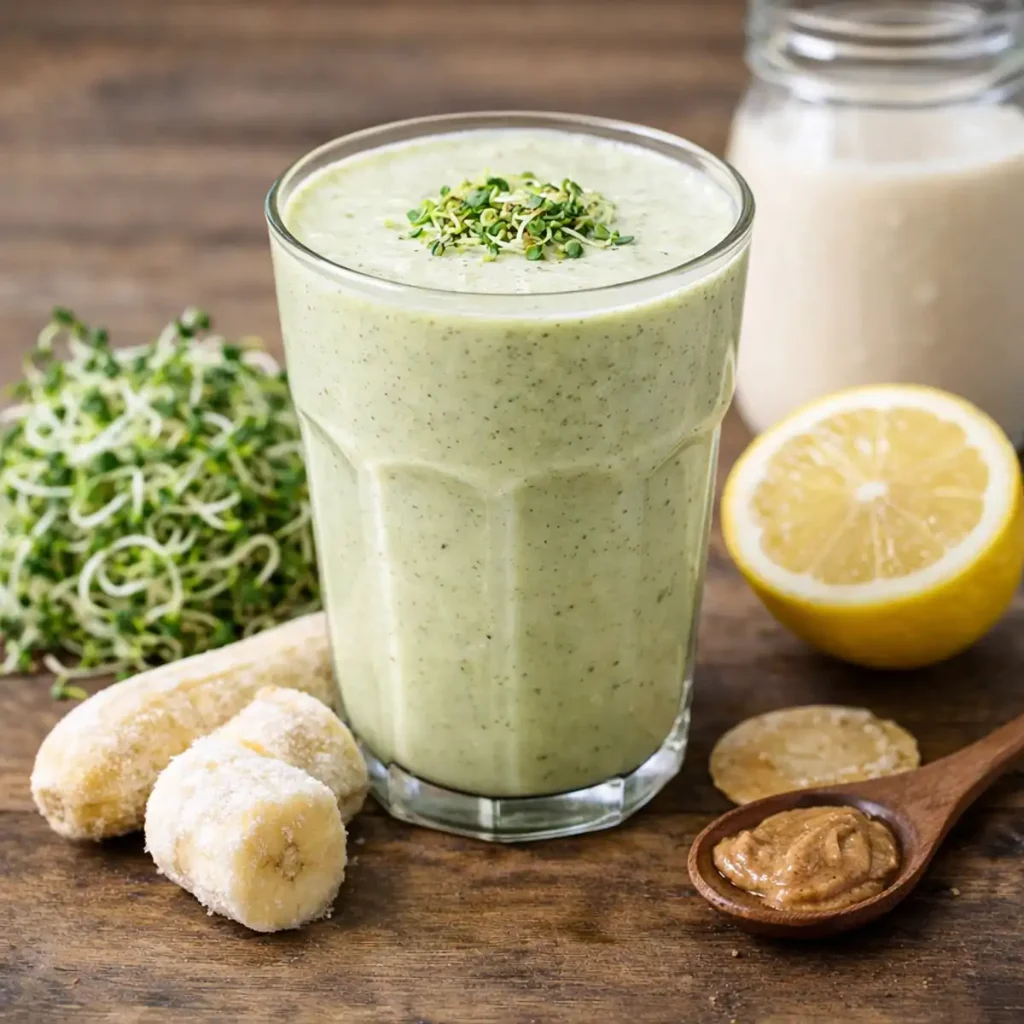
Key ingredients: 1 large handful of broccoli sprouts (approximately 30g, available from Tesco, Sainsbury’s, and Waitrose), 1 small frozen banana, 200ml oat milk, 1 tablespoon almond butter, a squeeze of lemon juice.
Blend all ingredients together on high power for 30 to 45 seconds. The banana smooths the slightly bitter edge of the broccoli sprouts. Almond butter adds body and protein. It should taste like a mildly nutty banana smoothie.
What it does: Broccoli sprouts contain sulforaphane at concentrations 20 to 100 times higher than mature broccoli, according to research from Johns Hopkins University. Sulforaphane is the most studied natural inducer of hepatic phase II enzymes (NRF2 pathway). A 2022 review in Nutrients confirmed sulforaphane’s consistent upregulation of glutathione S-transferase and quinone reductase in human clinical trials. This is the strongest mechanistic case in the detox smoothie category.
Nutritional highlight: Approximately 8g protein per serving (from almond butter and oat milk), 5g fibre, and a significant sulforaphane precursor dose. One 30g serving of broccoli sprouts delivers roughly the same glucosinolate content as 300g of mature broccoli.
Substitution: If broccoli sprouts are unavailable, use a large handful of mature broccoli (blanched and frozen in advance) and a tablespoon of fresh lemon juice to support glucosinolate conversion. The sulforaphane content will be lower, but the principle holds. Swap almond butter for sunflower seed butter for a nut-free version.
Smoothie 3: Milk Thistle and Spinach Morning Blend
Preparation time: 6 minutes. Cooking time: None. Total time: 6 minutes. Yield: 1 serving (approximately 320ml).
Key ingredients: 2 large handfuls of fresh spinach (approximately 60g), 1 teaspoon milk thistle powder (available from Holland & Barrett and Amazon UK), half a frozen banana, 1 tablespoon ground linseeds, juice of 1 lemon, 250ml cold water.
Blend spinach with water first until liquid, then add remaining ingredients and blend again. This prevents visible green leaf fragments and produces a smoother texture.
What it does: Milk thistle provides silymarin, a flavonolignan complex that is the most studied herbal compound for liver health. A 2023 systematic review in Phytomedicine found silymarin had hepatoprotective effects in clinical populations with existing liver conditions. Evidence in healthy adults is less conclusive, but the safety profile is well established. Spinach contributes folate for methylation and iron for phase I cytochrome P450 enzyme function.
Nutritional highlight: Approximately 6g of fibre per serving from linseeds and spinach. Ground linseeds provide both omega-3 ALA and lignans, which support hormone metabolism and are a priority nutrient for perimenopausal women according to the British Menopause Society 2023 guidance.
Substitution: Milk thistle powder can be omitted and replaced with a tablespoon of ground walnut for omega-3 addition without the supplement component. Swap spinach for kale for a higher glucosinolate content at the cost of a slightly more intense flavour.
Making These Smoothies Part of a Routine
The practical barrier to smoothie-as-breakfast is almost always the cleaning. A wide-mouth NutriBullet or Vitamix with a single blending cup reduces cleaning to 90 seconds. Prep the night before by portioning spinach and broccoli sprouts into reusable bags in the freezer. Then each morning is a question of opening the freezer, adding liquid, and pressing one button.
These **detox smoothie recipes** work because they consistently deliver liver-supportive phytonutrients at the first meal of the day. They are not magical. The liver and kidneys handle detoxification through established enzymatic pathways, and these smoothies support those pathways through food rather than claiming to perform the work directly. Three to four mornings per week is a realistic rotation. It is more than enough to make a meaningful contribution to your daily phytonutrient intake without requiring heroics at 7am.
Conclusion
Three smoothies, each built around a specific liver-support ingredient with a named evidence base. The beetroot blend for betalains and nitrates. The broccoli sprout blend for sulforaphane, the most direct phase II enzyme inducer available in a UK kitchen. The milk thistle blend for silymarin, with the caveat that the evidence base is stronger for existing liver conditions than for healthy adult maintenance. Start with the one whose ingredients are easiest to source. The broccoli sprout smoothie is worth the effort if your Sainsbury’s or Waitrose stocks the sprouts. **Detox smoothie recipes** that actually name their mechanisms are considerably more useful than any product promising to ‘flush toxins overnight,’ and considerably cheaper too. If you have existing liver or kidney conditions, speak to your GP before significantly altering your dietary pattern.